
If your water heater has started leaking, making strange noises, or simply stopped producing hot water, one of the first questions you'll ask is: how much does water heater installation cost in Austin?
The short answer: most Austin homeowners pay between $1,100 and $2,800 for a standard tank water heater installation, and between $3,000 and $6,500 for a tankless system. Heat pump (hybrid) water heaters typically fall in the $2,500 to $5,500 range before rebates.
The long answer, which is what this guide covers, is that your final price depends on the type and size of the unit, your home's fuel source, permit requirements from the City of Austin, the condition of your existing plumbing and venting, and who does the installation.
We get this question all the time. Here's the honest answer: it depends, but it's probably less than you fear, and definitely less than waiting until an aging tank fails and floods your garage.

Average Water Heater Installation Cost in Austin (2026)
| System Type | Average Installed Cost | Typical Range |
|---|---|---|
| Conventional tank (gas, 40–50 gal) | $1,800 | $1,200 – $2,800 |
| Conventional tank (electric, 40–50 gal) | $1,600 | $1,100 – $2,400 |
| Tankless (gas, whole-home) | $4,200 | $3,000 – $6,500 |
| Tankless (electric, whole-home) | $2,800 | $2,000 – $4,500 |
| Heat pump / hybrid (50–80 gal) | $3,800 | $2,500 – $5,500 |
| Point-of-use / mini tank | $700 | $400 – $1,100 |
Ranges reflect typical 2026 Austin-market pricing for professional installation including unit, labor, basic materials, and permit.
A quick note: an honest quote only comes after the right questions (fuel type, location, age of home). Be wary of any quote given without those questions. That's not an estimate; that's a guess.
Cost Breakdown: Where Your Money Actually Goes
1. The Water Heater Unit Itself
The equipment is usually 40–60% of the total project cost. Conventional gas tanks run $600–$1,200 for the unit (Bradford White, Rheem, and A. O. Smith dominate the professional market in Texas). Gas tankless units run $1,200–$2,800 (Navien, Rinnai, and Rheem are most commonly installed in Central Texas). Heat pump models run $1,500–$3,000, and use roughly one-third the electricity of a standard electric tank.
Bigger households need bigger equipment. A 40-gallon tank suits 2–3 people; a family of 4–5 in Austin typically needs 50 gallons or a properly sized tankless unit rated for Texas groundwater temperatures.
2. Labor: What Austin Plumbers Charge
Professional installation labor in Austin typically runs $75 to $150 per hour, and a standard tank replacement takes 2–4 hours, putting labor at roughly $150–$600 for a straightforward job. Labor climbs with gas line upgrades ($500–$1,500), venting changes ($300–$900), electrical work ($400–$1,200), relocation ($1,000–$3,000+), and code upgrades ($150–$500).
This is why any good installer asks where your unit sits before quoting: the same 50-gallon water heater that's a 2-hour job in an open garage can take twice as long crammed into a tight attic closet. Location really is everything.
3. City of Austin Permit Fees
Austin requires a plumbing permit for water heater replacement, typically $100–$200, inspection included. Reputable installers pull the permit for you and include the fee in the quote. If a contractor suggests skipping the permit to "save money," find a different contractor.
Real talk: yes, the permit is a hassle, and yes, some guys will offer to skip it. Here's the risk they don't mention: when you sell, a buyer's inspector can flag unpermitted work, which turns into closing credits or delays. That $150 permit is the cheapest insurance in this entire guide.
4. Removal and Disposal of the Old Unit
Most installers include haul-away for $50–$150, or free as part of the package.
9 Factors That Affect Water Heater Installation Cost in Austin
1. Tank vs. Tankless vs. Heat Pump
The single biggest cost driver. Tankless costs roughly twice as much installed as a conventional tank, but lasts about twice as long (20+ years vs. 10–12) and cuts energy waste.
2. Fuel Type: Gas vs. Electric
Gas units cost more to install but less to run. In Austin, natural gas water heating typically costs 30–50% less per month than electric resistance heating. Converting from electric to gas adds $800–$2,000 for the gas line extension.
3. Unit Size and Household Demand
Undersizing is a false economy, a 30-gallon tank for a family of five means cold showers and early burnout. Oversizing wastes energy and money.
4. Location and Accessibility
A water heater in an open garage is a 2-hour job. The same unit in a tight attic closet or a crawlspace under a pier-and-beam Austin bungalow can double labor time.
5. Condition of Existing Plumbing and Venting
Pre-1990s Austin homes often have corroded supply lines, undersized gas piping, or venting that doesn't meet current code. A pre-installation inspection identifies these before surprises mid-job.
6. Water Quality: Austin's Hard Water Problem
Central Texas has moderately hard to hard water, brutal on water heaters. It accelerates sediment buildup, forces the burner to work harder, and shortens unit life. Budget for annual flushing ($150–$250) and consider a softener or scale inhibitor.
Here's the thing nobody tells you when you move to Austin: the water here is hard. Heating elements pulled from old tanks come out caked in chalky mineral deposits. If your heater rumbles like a coffee maker, that's not normal aging, that's sediment, and it's costing you money every single month it sits there.

7. Energy Efficiency Ratings
Higher UEF ratings cost more upfront. Heat pumps (UEF 2.0–3.5) are in a different league, and Austin's long hot summers actually help them perform, since they work best in warm ambient air.
8. Warranty Length
A 12-year warranty tank costs $150–$300 more than the 6-year version, thicker lining, better anode rod, superior insulation. Almost always worth it.
9. Who Installs It
Texas requires a license for plumbing work. The cheapest bid on gas and pressurized-plumbing work is rarely the cheapest outcome.
Real talk: here's how the "cheap bid" story usually ends: a $900 gas tank install skips the permit, the expansion tank, and the drain pan. Six months later, fixing it all properly costs another $1,400. That "cheap" bid really cost $2,300. There's cheap, and then there's expensive-cheap.
Tank vs. Tankless in Austin: The Honest Long-Term Math
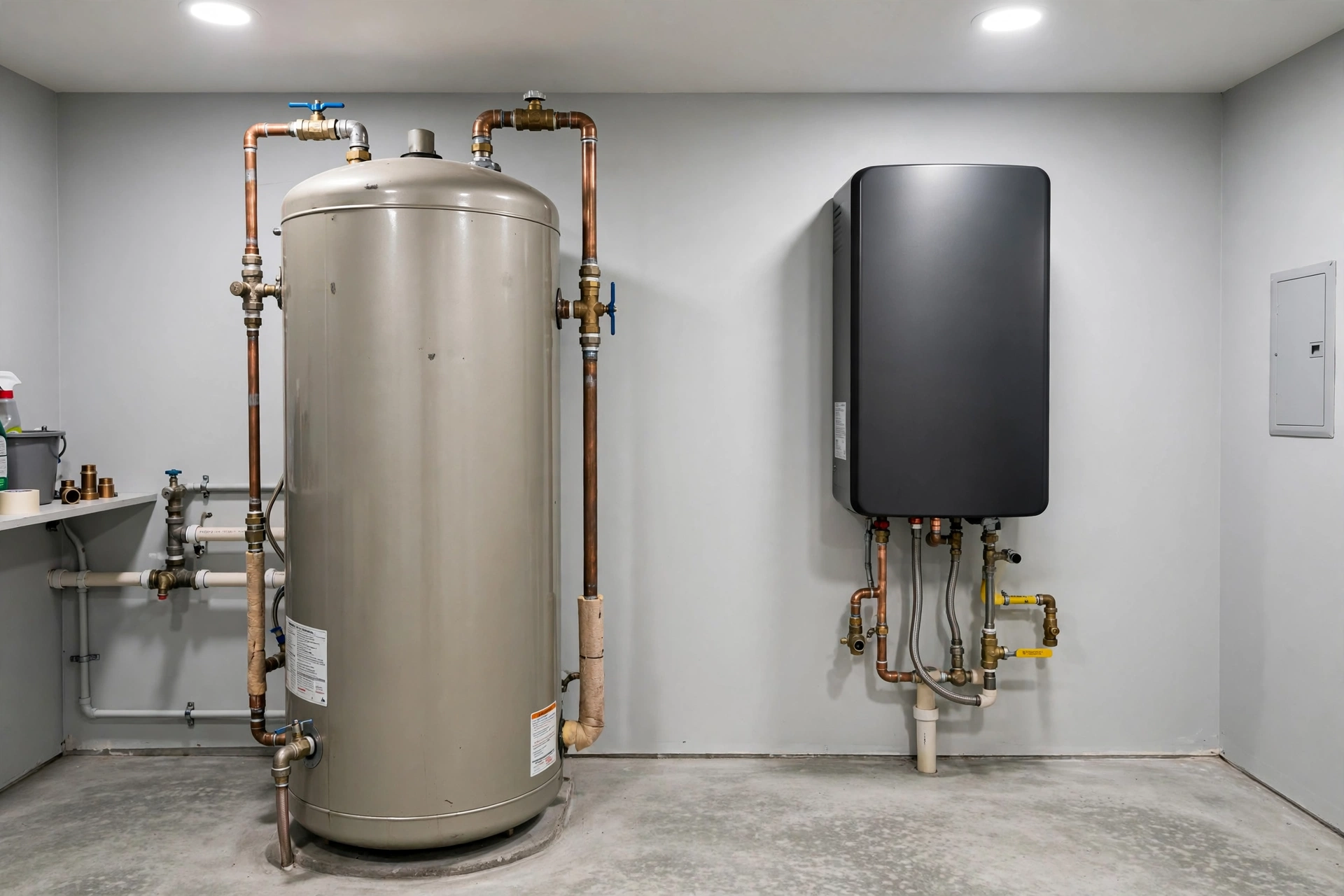
Upfront: Tankless costs $1,500–$3,000 more installed. Lifespan: 20+ years vs. 10–12. Energy savings: 25–35% on the water-heating portion of your gas bill ($100–$200/year). Break-even: around year 8–12, right when you'd be replacing a tank heater anyway. When tank makes more sense: tight budgets, selling within 5 years, or prohibitively expensive conversions.
Austin-Specific: Permits, Codes & Rebates
City of Austin Code Requirements
Beyond the permit fee, Austin enforces: expansion tanks ($150–$300), drain pans with drain lines ($100–$250), proper TPR valve discharge, strapping, and gas sediment traps. These aren't upsells, they're the law.
Austin Energy Rebates: Save $1,000+
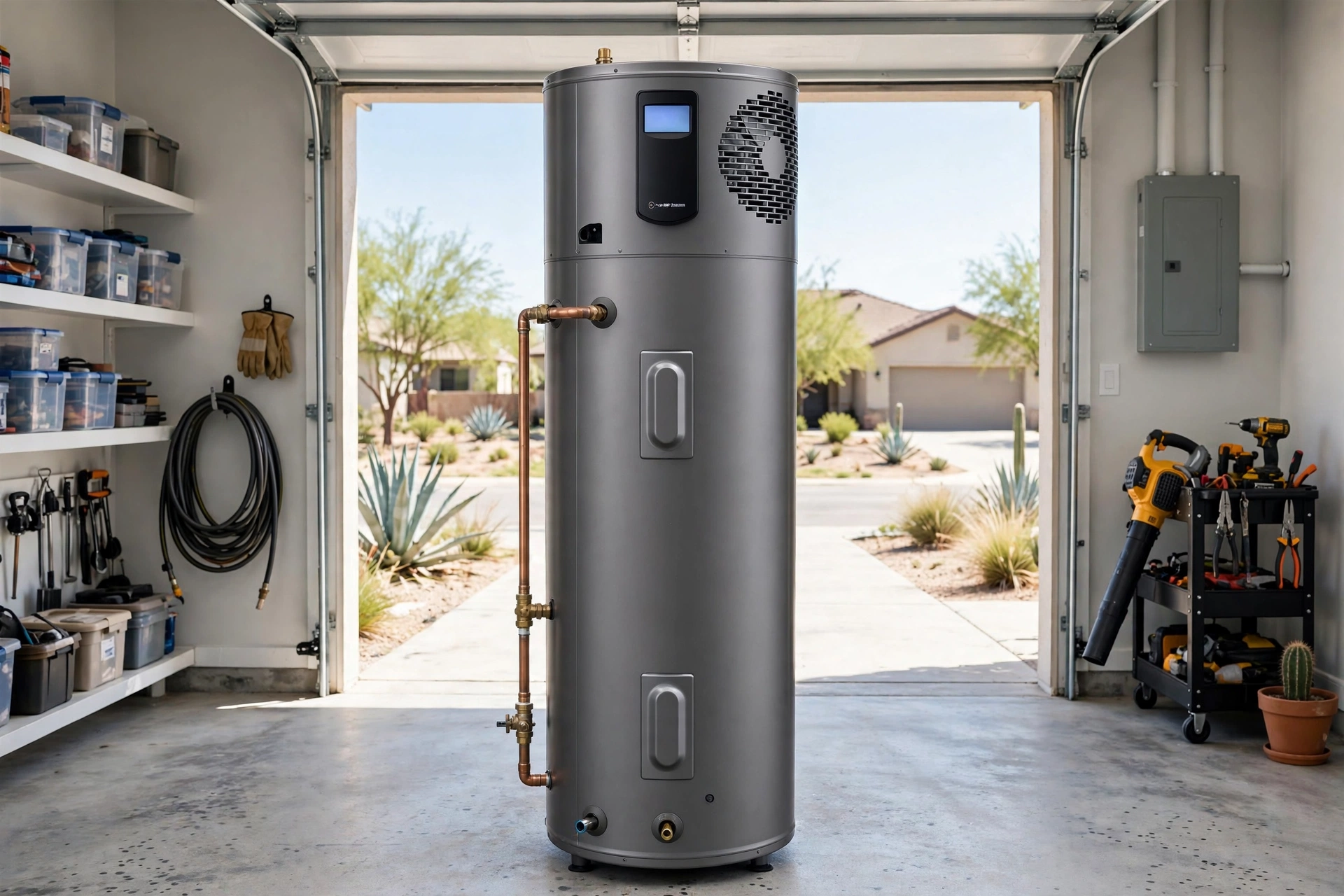
Austin Energy offers substantial rebates for heat pump water heaters, historically up to $1,200 or more for qualifying installations, plus potential federal tax credits. A heat pump unit with rebates can cost little more than a conventional electric tank while cutting water-heating energy use by 60–70%. Verify current offerings, and ask whether your installer handles the rebate paperwork.
Honestly? Many homeowners have no idea these rebates exist. Someone set on a basic electric tank who learns the rebate math first can end up with a heat pump unit for barely more money and cut their water-heating bill by two-thirds. Always ask about rebates before you decide, not after.
Repair vs. Replace: Making the Call
Use the 50% rule: if the repair costs more than half the price of a new unit, and the unit is past half its expected lifespan. Replace it. Repair when the unit is young and the problem is a single component (thermostat, element, igniter: $150–$400). Replace when the tank itself leaks (never repairable), the unit is 10+ years old, hot-side water runs rusty, or bills creep up unexplained.
A sensible rule of thumb: a $400 repair on a 13-year-old tank is money better put toward a replacement.
7 Ways Austin Homeowners Save on Installation
- Get 3 written quotes, compare scope, not just price.
- Time it before failure. Emergency replacements cost 20–40% more.
- Ask about rebates first. Austin Energy + federal credits can erase the high-efficiency premium.
- Bundle maintenance. Annual flushing is needed anyway. Ask for a package discount.
- Keep the same fuel and location. Like-for-like is always cheapest.
- Choose the right size, not the biggest. Proper sizing saves upfront and monthly.
- Maintain what you install. Annual flushing adds 3–5 years of tank life.
What to Ask Your Installer Before Hiring
- "Are you licensed, and will you pull the City of Austin permit?" Both answers must be yes.
- "Is the quote all-inclusive?" Unit, labor, permit, haul-away, expansion tank, pan, code upgrades, in writing.
- "What warranty do I get, unit AND labor?" 6–12 year manufacturer + at least 1-year labor.
- "How do you handle Austin Energy rebates?" The installer should know the program and handle paperwork.
- "What's your plan for my hard water?" Flushing, anode rods, scale treatment, they should have answers.
Frequently Asked Questions
How long does water heater installation take in Austin?
2–4 hours for a standard tank replacement; a full day (6–10 hours) for tankless conversions. City inspection typically follows within 1–2 business days.
Do I need a permit to replace a water heater in Austin?
Yes, the City of Austin requires a plumbing permit even for like-for-like swaps. Your installer should pull it.
What's the cheapest water heater to install in Austin?
A conventional electric tank ($1,100–$2,400 installed) is cheapest upfront but most expensive to run. Gas tanks usually offer better long-term value.
How much does it cost to switch from tank to tankless in Austin?
$3,000–$6,500 all-in for gas, including unit, gas/venting/electrical upgrades, permit, and installation. Before you decide, read our honest tank vs tankless comparison to see whether the switch makes sense for your household.
Does Austin Energy really give rebates for water heaters?
Yes, up to $1,200+ for qualifying heat pump installations, plus possible federal tax credits. Verify current programs before purchasing.
How long do water heaters last in Austin?
10–12 years for tanks (with annual flushing), 20+ years for tankless (with descaling), 13–15 years for heat pumps.
Should I repair or replace my 12-year-old water heater?
Replace. At 12 years a conventional tank is past its design life in Central Texas water conditions. If your tank is acting up right now, run through our no-hot-water troubleshooting guide first to confirm whether it's a quick fix or truly done.
Need Same-Day Water Heater Installation in Austin, TX?
Look, nobody wants to buy a water heater. But a straight answer, a fair price, and a job done right the first time take most of the stress out of it. That's what we try to give every customer, every day.
Upfront pricing, all City of Austin permits pulled, rebate paperwork handled on qualifying installations.
Call (888) 492-0093 (24/7)Prices reflect typical Austin, TX market ranges as of 2026 and vary by home, equipment, and site conditions. Contact a licensed professional for an exact quote.